Rescuing Food at the Minnesota State Fair
Every year, the Minnesota State Fair draws people from all over the Midwest. This year, nearly two million people walked through the gates over twelve days. New food items were everywhere a person turned, from cheese curds and Amish doughnuts to corn on the cob. Food scarcity was not in sight.
Meanwhile, hunger is on the rise in our community and across the country. So what happens to all the quality food left behind when the gates close for the season?
That’s where we come in.
Loaves & Fishes has been rescuing food from the State Fair for many years. Historically, though, it’s been a bit of a different partnership. It’s more one-on-one with vendors than with the MN State Fair itself. This year, it has become one of our most public reminders that food rescue is our primary food supply chain, as we serve over 6 million meals throughout the year to those who need it most.
In 2025, Loaves & Fishes rescued 4,709 pounds of food, which is equivalent to approximately 3,900 meals.
For the first time this year, Loaves & Fishes partnered directly with the Minnesota State Fair and Second Harvest Heartland to rescue food on-site. Rather than making one-off pickups here and there, a refrigerated truck was parked at the fairgrounds for the entire run of the fair, ready to collect surplus food from vendors as it came in throughout the week.
Second Harvest helps coordinate the consolidation and storage of surplus food from the fair. Loaves & Fishes then rescues the food, brings it into our network, and works to redeploy it into the community.
At the close of the fair, our team pulled up and waited as the last vendors packed up their booths. One by one, vendors trickled in with boxes of unused French fries, cases of extra cheese curds, and bags of milk.
So what happens after the food is collected? We bring the food into our system, safely store and manage it, and then work to get it back out through our programming and community network.
Depending on the item, this could happen the same day or within a week.
Shelf-stable products give us more flexibility, but perishables can move through our system in a matter of days. The ability to quickly receive, manage, and redeploy food is a critical part of making food rescue work.
It’s a simple idea and a well-oiled process. An event the size of the Minnesota State Fair naturally generates surplus inventory, and good food shouldn’t go to waste when people need it. But making it work at the scale of the State Fair takes real coordination and fair organizers willing to make space for it.
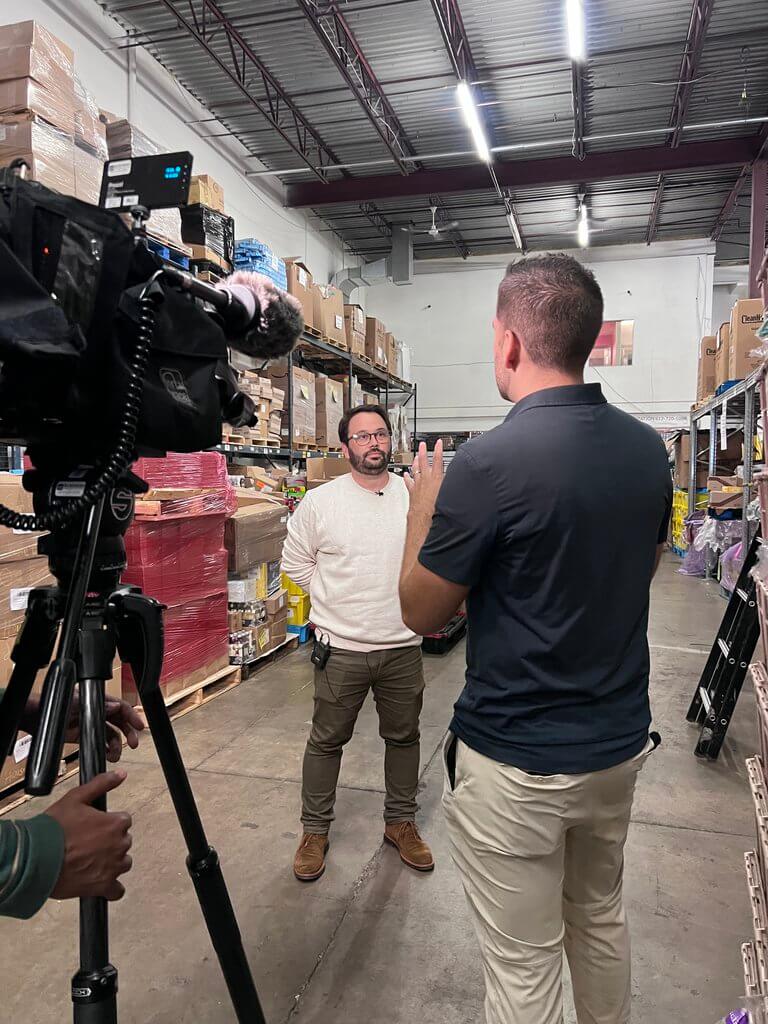
WCCO | CBS News Minnesota reporter Adam Duxter rode along with us as the truck made its way from the fairgrounds back to our Minneapolis warehouse, capturing a piece of the journey most people never get to see.
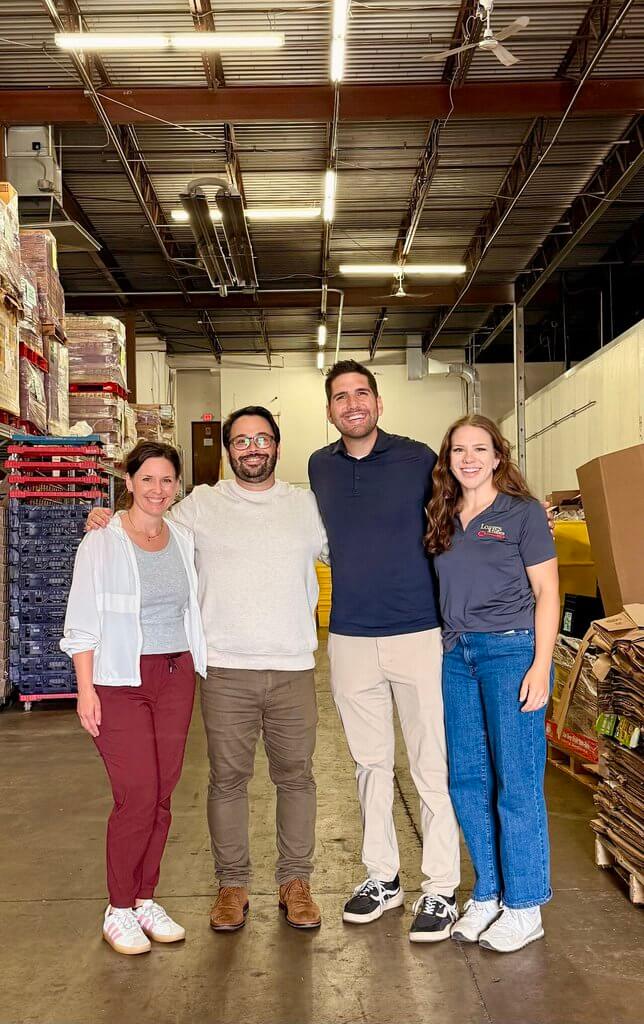
None of this happens without the people who make it work: our warehouse and food rescue staff, the volunteers who show up rain or shine, and partners like the Minnesota State Fair who choose to make room for this kind of collaboration.
The cameras may have been here to capture this adventure, but this is established work our team does year after year, and major events represent only one piece of a much larger, year-round food rescue operation.
Watch the full WCCO story above or read the MPR article here.
Take a look at some fun behind-the-scenes photos: